West Papuans swimming for freedom

A crucial message for the UN is being delivered across Lake Geneva in a most unusual way, writes Danny Chivers. The New Internationalist

Could you swim for 30 hours? Right now, a six-person swimming team is preparing to do exactly that, relay-style, across the 69 kilometres of Lake Geneva. On Monday 28 August, they will set off across the water, carrying a message from more than 160,000 people to the UN’s headquarters on the far shore.

The swim is supported by the Free West Papua campaign, and aims to raise the profile of the Indigenous West Papuan people’s ongoing struggle against Indonesian occupation. The international petition that the swimmers are delivering – which can still be signed online – calls on the UN to take action to end human rights abuses in West Papua and give the people of that region the vote for self-determination that they were denied in 1969.

This petition shows the growing level of international support for the cause of West Papuan freedom, leading the Jakarta Postto conclude that the ‘campaign for an independent Papua has been relentless and has made significant gains in past years’. To understand the significance of this, just look at how the Indonesian government has responded: by banning the petition across the whole of the country. Anyone signing the petition in Indonesia – and especially in West Papua – risks state violence or arrest.

Yanto Awerkion, of the West Papua independence group the West Papua National Committee (KNPB), was arrested on 23 June by Indonesian security services during a rally and prayer session promoting the petition. He remains behind bars, but this hasn’t stopped him from releasing a video online about his experiences. Despite the risks, thousands of West Papuans have been signing the petition.

Related: Find out more in our magazine special on West Papua’s struggle (available online)

oel Evans, founder of Swim for West Papua, said, ‘West Papua has been hidden from the public eye for nearly half a century. Hundreds of thousands have died, been tortured, arrested, beaten and imprisoned. Indonesia is trying to cover up a genocide, with the help of its Western allies.

‘We hope this swim can penetrate the shadows and assist the Papuans in their struggle for basic self-determination and liberation. Doing this swim requires us to recognise our shared identity as human beings.’

Benny Wenda, a Papuan tribal leader, spokesperson for the United Liberation Movement for West Papua and refugee with asylum in Oxford, England, said, ‘This swim is a historic moment in our long path to freedom. The swim team are helping to shine a light on one of the world’s longest and most brutal military occupations, and tens of thousands of West Papuans in my homeland are willing them on and signing the petition despite risk of arrest and torture.

‘The actions of every one person can make a difference, and West Papuans need international solidarity work to help the world hear our cry for freedom.’

Help us produce more like this

Editor Portrait

Patreon is a platform that enables us to offer more to our readership. With a new podcast, eBooks, tote bags and magazine subscriptions on offer, as well as early access to video and articles, we’re very excited about our Patreon! If you’re not on board yet then 


1.000 Warga Papua Jadi WN Papua Nugini

Pengungsi Papua di Papua Nugini (Foto: Youtube)

PORT MORESBY, SATUHARAPAN.COM – Lebih dari 1.000 warga Papua yang menjadi pengungsi di Awin Timur di Provinsi Barat Papua Nugini, akan diberikan kewarganegaraan Papua Nugini dalam waktu dekat ini.

Media Papua Nugini, Post Courier melaporkan, para pengungsi tersebut seharusnya memperoleh sertifikat kewarganeagraannya dua pekan lalu. Namun sidang Komisi Penasihat Kewarganegaraan yang dipimpin anggota parlemen dari Kabwum, Bob Dadae, membatalkannya. Sebab, pada hari yang sama parlemen menyelenggarakan pemilihan kepala daerah dan Dadae terpilih sebagai Gubernur Jenderal.

Pelaksana tugas Kepala Keimigrasian dan Kependudukan Papua Nugini, Solomon Kantha, menolak untuk memberikan keterangan. Ia mengatakan pengumuman terkait hal ini akan diberikan oleh Menteri Luar Negeri, Rimbink Pato.

Menurut Post Courier, pemerintah PNG juga sedang memproses kewarganegaraan pengungsi lainnya di Port Moresby, Manus dan di perbatasan.

Saat ini Komisi Penasihat Kewarganegaraan dipimpin oleh pelaksana tugas Kepala, yaitu Solan Mirisim yang juga anggota parlemen dari Telefomin.

Menurut data PBB, ada sekitar 10.400 pegungsi Papua yang bermukim di Awin Timur dan di berbagai daerah lain di PNG, khususnya di Port Moresby, Manus dan kota perbatasan.

Editor : Eben E. Siadari

West Papuan Refugees in PNG

Sydney October 7, 2016 / Issue 1113 Australia

About 50 people rallied on October 2 in a show of solidarity with the peoples of West Papua, and to protest the ongoing genocide and dispossession that has been carried out by a rapacious Indonesian state against the Indigenous population since the 1960s.

After some spirited speeches, including by members of the small local West Papuan community in exile, the rally set off for a short march from Town Hall to the New South Wales Parliament.

The rally also expressed its support for:

  • West Papua’s bid for full membership in the Melanesian Spearhead Group;
  • Human rights monitoring and open access to foreign journalists in West Papua;
  • An independent fact finding mission into West Papua;
  • The abolition or amendment of the Lombok Treaty;
  • Assistance for the West Papuan Refugees in PNG; and a
  • A United Nations-supervised referendum in West Papua.

Like the article? Subscribe to Green Left now! You can also like us on Facebook and follow us on Twitter.

Source: https://www.greenleft.org.au

West Papuan Refugees in PNG was originally published on WPRRA.club

West Papuans in PNG grateful for land allocations

Rainbow settlement in Port moresby, Papua New Guinea, where West Papuan refugees have squatted for years.

Rainbow settlement in Port moresby, Papua New Guinea, where West Papuan refugees have squatted for years. Photo: RNZI / Johnny Blades

Many of them were either in the courts over the legality of their areas of residence while others had been issued notices for eviction.

A construction officer with the West Papuan Relief Association said the community’s spirits had been lifted by the National Capital District Commission’s allocation of 10 hectares in the Red Hills suburb of Gerehu.

Arnold Amba said the community was already clearing the land and fundraising for its development.

Mr Amba said getting some 200 families resettled would be an even bigger challenge.

“I want to message to the international organisations like UNHCR, the International Organisation for Migration and Foreign Affairs to to help us to support our program to occupy the new land. So we need help to move in on the new land.”

Source: https://www.rnz.co.nz/

West Papuans in PNG grateful for land allocations

From Dateline Pacific

Listen duration3′ :06″Add to playlistDownload

Listen

West Papuan refugees in the Papua New Guinea capital Port Moresby have expressed gratitude at being given land for resettlement.

TRANSCRIPT

After many years without a permanent home, West Papuan refugees have been allocated land for resettlement in Papua New Guinea’s capital Port Moresby.

More than a thousand West Papuans, some of whom have been in the country for more than 30 years, squat on land in the Rainbow settlement as well as in Hohola and  Waigani within the National Capital District.

Koroi Hawkins has this report

Many West Papuans fled into PNG in the 1980s to escape persecution and military attacks in their homeland after it became part of Indonesia. Most of them live without full citizenship rights and have often been evicted from different parts of PNG over the past few decades, unable to access land or services available to Papua New Guineans. An allocation of about 10 hectares of unused land north east of Port Moresby’s CBD at Red Hills in the suburb of Gerehu represents a breakthrough for them. Arnold Amba is a technical officer with the West Papuan Relief Association and he says the refugee community’s spirits have been lifted by the allocation. He  says the community is already clearing the land and fund-raising for its development.

ARNOLD AMBA: “People are very happy for that arrangement. So they make themselves to clean up the place and work together to make arrangements for resettle themselves.”

Registration of the land title has not actually been completed yet by the National Capital administration but its governor Powes Parkop says he has allowed the West Papuans to begin clearing the land because there has been some encroachment by squatters from different provinces of PNG. Governor Parkop says he hopes the area will become a special place for the West Papuan community.   

POWES PARKOP: ” The concept is to not just provide a venue for refugees. We are going to build a West Papuan City. It is a cultural place for them an identity for them a place where they can celebrate themselves as West Papuans. Thinking about where they come from and what their future would be. This is the vision that I have.”

In order to realise that vision however the land needs to be developed, starting with the construction of basic road infrastructure and utilities. The coordinator of the Free West Papua PNG chapter, Fred Mambrasa, estimates about half a million Kina or about $US160,000 would be needed to achieve this and to put in proper boundary markers. He says the West Papua community will need additional assistance.    

FRED MAMBRASA: “I want the Papua New Guinea government to help us and build this land and try to help us West Papua in Port Moresby because West Papua Relief Association is trying to help some refugees in other provinces like Madang and Manus, Vanimo, Kiunga. That is why I am asking the government of Papua New Guinea to try and help us.”

Some 200 West Papuan families will be moving onto the land over the course of the next few months. It can’t come soon enough for many of them who are once again facing eviction orders from the settlements in which they’re currently residing.

West Papuan refugees allocated Port Moresby land for settlement

By Asia Pacific Report – Source: https://eveningreport.nz/

By Nadia Marai in Port Moresby

About 10ha of land has been allocated to West Papuan refugees to resettle at Red Hills in the Papua New Guinean capital Port Moresby suburb of Gerehu.

The land was secured through consultations between the traditional land owners, the West Papua Relief Association and the National Capital District Commission with the assistance of NCD Governor Powes Parkop.

Governor Parkop, long a supporter of West Papuan issues stretching back to when he was a lecturer at the University of Papua New Guinea, said NCDC was implementing a government decision made in 2010 to resettle the refugees.

The West Papua Relief Association has been working to resettle all West Papuan communities living around Port Moresby and to later consider ways to settle other refugees living outside capital and in other provinces.

The association won approval from NCD Commission on 20 December 2013 for the resettlement.

Most West Papuans have been living in Port Moresby for decades but without land rights.

They have previously faced eviction from their places of residence.

More than 200 West Papuan families who have lived in various locations are Port Moresby will now live in these allocated land.

They now have a proper and permanent place to settle but with the little they have, they have appealed to the government and NGOs to step in and help them buy building materials to construct homes.

They also plan to build a school and a church which will help build and strengthen the community.]]>

West Papuan refugees allocated Port Moresby land for settlement

By Nadia Marai in Port Moresby, Source: https://asiapacificreport.nz/

Some of the West Papuan refugees checking out the allocated land for their resettlement. Image: Loop PNG

About 10ha of land has been allocated to West Papuan refugees to resettle at Red Hills in the Papua New Guinean capital Port Moresby suburb of Gerehu.

The land was secured through consultations between the traditional land owners, the West Papua Relief Association and the National Capital District Commission with the assistance of NCD Governor Powes Parkop.

Governor Parkop, long a supporter of West Papuan issues stretching back to when he was a lecturer at the University of Papua New Guinea, said NCDC was implementing a government decision made in 2010 to resettle the refugees.

The West Papua Relief Association has been working to resettle all West Papuan communities living around Port Moresby and to later consider ways to settle other refugees living outside capital and in other provinces.

The association won approval from NCD Commission on 20 December 2013 for the resettlement.

Most West Papuans have been living in Port Moresby for decades but without land rights.

They have previously faced eviction from their places of residence.

More than 200 West Papuan families who have lived in various locations are Port Moresby will now live in these allocated land.

They now have a proper and permanent place to settle but with the little they have, they have appealed to the government and NGOs to step in and help them buy building materials to construct homes.

They also plan to build a school and a church which will help build and strengthen the community.

West Papuan refugees set for resettlement

By NAOMI WASE, The National PNG

West Papuan refugees living in Port Moresby will finally have a place to resettle.

The Government, through NCD Governor Powes Parkop, has allocated them 10 hectares of land at Red Hills in Gerehu, Port Moresby.

More than 200 West Papuan families who lived in Hohola, Rainbow and Waigani settlements are starting to clear the allocated land to build their homes.

West Papua Resettlement Committee deputy chairman and Rainbow refugee camp chairman Freddy Waromi thanked Parkop for taking the initiative to secure land for their resettlement.

Waromi said he was happy but the place needed development.

“Right now, this 10 hectares of land is surrounded by mountains and a swamp in the centre,” Waromi said.

He said they needed earth moving equipment to level and clear the place.
“We will also need an immediate installment of water supply and electricity as we move in,” Waromi said.

On behalf of the West Papuans, Waromi is calling on other stakeholders like the Foreign Affairs and Immigration Department, United Nations high commissioner for Refugees and International Organisation for Migration to help Parkop in supporting them.

West Papua Refugee Relief Association chairman Elimar Gombo said they needed help to develop the place.

“We used the little money that we had to make a boundary survey which was approved by the NCDC building board and now we need support,” Gombo said.

The association’s deputy chairman Soni Yosi said there were still legal questions over half of the land.

“Some people have claimed to have titles to over half of the land so for now we are moving the West Papuans to the other half and later we will solve the problem,” Yosi said.

He said as soon as the resettlement in NCD was completed, they would look into helping resettle West Papuans living in other provinces.

Parkop said NCDC was implementing a government decision made in 2010 to resettle the refugees.

West Papuan refugees in Papua New Guinea: on the way to citizenship?

Written by Jenny Munro, at DEVPOLICY

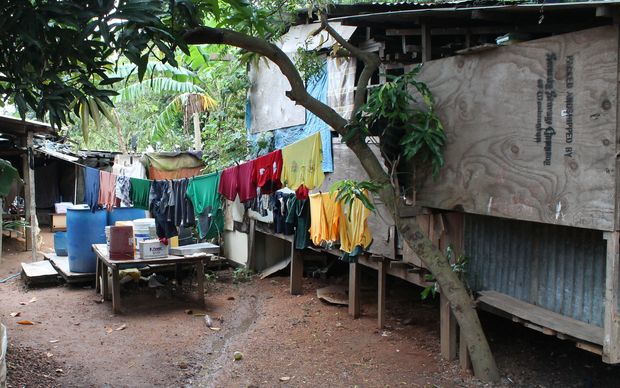
At Rainbow settlement in Port Moresby, 38 families of West Papuan heritage live in a drainage ditch approximately 100 metres wide by 200 metres long. To one side, the neighbours’ retaining wall contains pipes which direct runoff water and rain directly into the settlement. On the other side of the settlement is a construction site that doubles as a soccer field for Rainbow’s children. The houses are small structures built with a patchwork of materials that reveals the recent history of external engagement — tarps from the United Nations High Commissioner for Refugees (UNHCR), plywood from a church fundraiser, plastic chairs from a West Papuan who lives outside the settlement. In the context of increasing efforts from Papua New Guinea (PNG) authorities to register West Papuan refugees and provide citizenship status, this post flags some of the relevant historical context and reflects on current challenges. As Papua New Guineans including Oro Province Governor Gary Juffa have suggested, citizenship is not sufficient to improve West Papuan refugees’ living conditions.

Over 100 West Papuan refugees have been living in Rainbow for the past eight years, since being evicted from 9 Mile settlement. According to one community leader, 22 babies were born to refugee families in the settlement in 2015. The children are entitled to access public school education and health services though their residency status remains ambiguous. But like other urban residents in Port Moresby’s settlements, many children do not attend school because their parents struggle to afford sufficient food, clean clothes, transport or extra costs associated with school.

In Rainbow, the women are the primary income earners. They sell fish and shrimp at the local market near the settlement. A few of the middle-aged men, it was explained to me, had held government jobs but struggled with mental health effects of displacement, insecurity and what researchers have called ‘sakit hati’ — an Indonesian term that literally translates to ‘heart sick’ — but which also conveys anger and resentment (Rees and Silove 2011). These feelings interfered with the ability of some refugees to cope with daily life, and some men in the settlement left their jobs.

Community leaders also described feelings of resentment related to the failure of the PNG government to properly assist them to resettle. Specifically, these refugees want land. A community member passionately asserted, ‘We don’t belong in a drain’. They want to grow food for subsistence and for sale, to have sufficient space to be together as a community, and to establish a permanent connection in a cultural context where land is strongly associated with identity and status. Unfortunately, this particular desire makes the Rainbow refugees a lot like many other urban residents with insecure tenure in settlements in Port Moresby (Rooney 2015 [pdf]). As with urban settlers elsewhere in Melanesia, these are people whose rights to care, investment and protection from the state remain ambiguous (Keen and Barbara 2015 [pdf]).

Unlike Papua New Guineans in settlements, West Papuan refugees, mainly civilians and villagers who were not fighting against Indonesian rule, were displaced to PNG as Indonesia’s military forces worked to eradicate Papuan resistance beginning in the 1960s. Over the years, the exodus is estimated to be about 13,000, most in 1984, when 11,000 crossed the border (Glazebrook 2014:2 [pdf]). Today there are an estimated 1500 West Papuans living in Port Moresby.

Refugees may continue to see themselves as having unresolved land claims in West Papua. As one Rainbow community member said, ‘In West Papua, I have land. I am a landowner, and I would like to go back to my land.’ But that, he says, is impossible as long as Indonesia governs.

PNG has struggled to implement a refugee policy and system, especially for West Papuans living outside the former UNHCR camp at East Awin in Western Province (Glazebrook 2014:1 [pdf]). Citizenship applications were criticised as prohibitively expensive, at 10,000 kina. In December 2015 the PNG government reported it was processing citizenship applications from 3000 refugees from East Awin, and the fee was waived. Recently, more statements have been made about the government’s commitment to registering and providing citizenship to West Papuan refugees. However, some refugees in Port Moresby have questioned what difference this status will make in the absence of supports towards their basic needs. A leader at the Rainbow community remarked, ‘I do not want citizenship unless the government gives us land’.

The rights and treatment of West Papuans is a sensitive political issue in PNG, and policy towards these refugees has historically been affected by political consideration for the relationship with Indonesia. The permissive residency visa initially arranged for West Papuans at East Awin prohibited them from engaging ‘directly or indirectly in any political activity that might affect the good relationship between the governments of PNG and Indonesia’ (cited in Glazebrook 2014:3 [pdf]). PNG government leaders typically see Indonesia as an important economic and political ally, and Indonesia has been clear that it will reward governments that support its sovereignty in Papua.

West Papuans in PNG carry with them experiences that cannot be depoliticised, but avoiding them because of what they might represent, voice or destabilise is in effect enacting another layer of violence. Perhaps the current mobilisation towards citizenship is an opportunity for the PNG government to acknowledge West Papuan refugees’ experiences of past violence in Indonesia. This would be in keeping with both what West Papuan peace activists want and what Indonesian leaders agreed to in the 2001 law on Special Autonomy for Papua (Braithwaite et al. 2010:97).

Politics writ large shapes the identity, sense of community and history of West Papuans in Rainbow, but the everyday politics of getting children to school, putting food on the table and keeping families healthy and together are equally valued. There is a need for research to reveal more about what policies and interventions will help alleviate their health, land, education and livelihood challenges, both as urban settlers and as political refugees.

Following the unfolding story of registration for citizenship and changing immigration status for West Papuans in settlements also provides a unique opportunity to better understand how processes of documentation, recognition and dedicated attention could improve the circumstances of other Melanesians living in informal settlements in Port Moresby and beyond.

Download PDF

Jenny Munro is a Research Fellow with the State, Society and Governance in Melanesia (SSGM) Program at ANU. This post was originally published as SSGM In 

Helping West Papuan Refugees

West Papuan refugees either currently have no formal documentation or hold quasi-official “permissive residence permits”. This lack of formal status has hampered most of them from achieving their full potential. The Government is seeking to address this by providing them citizenship, which will enable them to have the same rights, responsibilities, identity documentation, and legal status as other Papua New Guineans.

The Government of PNG is undertaking a major nation-wide Naturalisation and Registration Project to regularise the status of West Papuan refugees. The project is in line with the Government of PNG’s highest commitment to extend the best possible support and services to its citizens/residents by providing formal identity documents. ICSA has registered more than 2721 West Papuans in Western Province by the end of 2015. It is expected that over the next 2 years all West Papuans in PNG will be registered and provided the opportunity to apply for PNG citizenship.

The West Papuan refugees, as a result of citizenship, will be able to vote, study, work, travel overseas, and avail health, education, and financial services. The government has further waived off PGK 10,000 Citizen Application Fee for the West Papuan refugees. The Citizenship Advisory Committee (CAC) of PNG will be meeting soon to deliberate on 1112 applications received in East Awin, Kiunga, and Port Moresby.

Source: https://www.ica.gov.pg

Related: Refugee Status Determination Process

Design a site like this with WordPress.com
Get started